Crack Sealing vs Crack Filling: What Florida Asphalt Needs
Two treatments that look alike but do different jobs. Choosing the right one, and doing it before summer rain, is one of the cheapest ways to protect a parking lot.
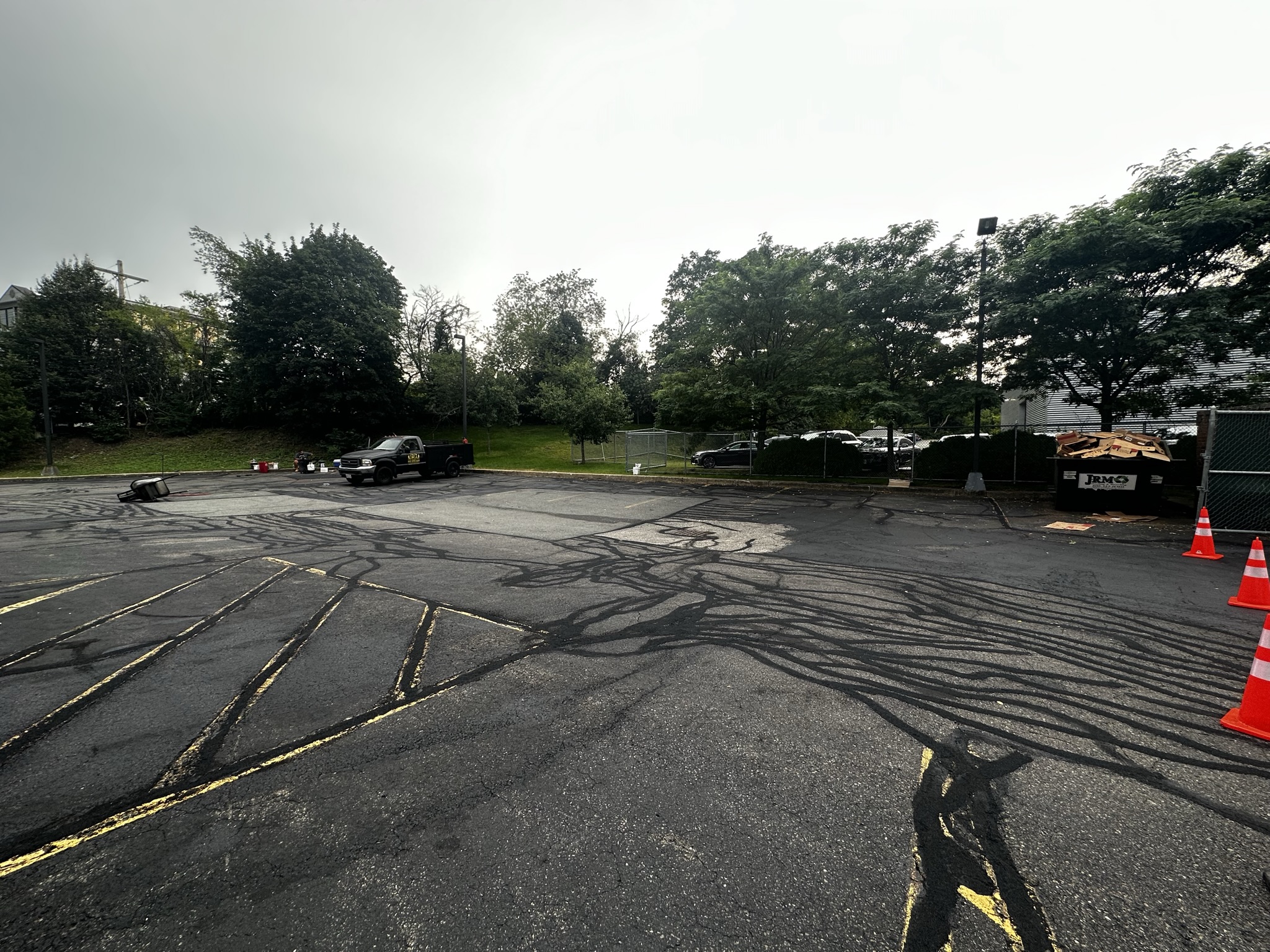
Short answer: crack sealing puts a flexible, hot-applied rubberized sealant into "working" cracks that open and close with temperature, and generally lasts longer. Crack filling puts a less flexible material into cracks that barely move, and costs less. In Central Florida, either one should be done before the summer rains, because every open crack is a path for water into the base.
Property managers often see "crack sealing" and "crack filling" used as if they meant the same thing, sometimes on the same estimate. They are different treatments with different materials, preparation and life spans. Knowing which one you are being quoted helps you compare bids and set realistic expectations for how long the work will last.
Crack sealing vs crack filling at a glance
Typical characteristics from general industry practice; products and results vary.
| Crack sealing | Crack filling | |
|---|---|---|
| Best for | Working cracks that move with heat and cooling | Non-working cracks that barely move |
| Material | Hot-applied rubberized (polymer-modified) sealant | Asphalt emulsion, cold-pour filler or less flexible hot-pour |
| Preparation | Clean, dry; often routed to create a reservoir | Cleaned; usually not routed |
| Placement | Fills the crack, often with a thin band over the top | Fills the crack level with the surface |
| Typical life | Several years | About 1–2 years |
| Relative cost | Higher | Lower |
Working and non-working cracks
The choice depends on how the crack behaves. A working crack changes width as the pavement heats and cools, by roughly 1/8 inch or more by a common rule of thumb. Transverse cracks across a drive aisle and long cracks along paving joints usually behave this way. They need a material that stretches and recovers without pulling away from the crack walls, which is what a sealant does.
A non-working crack barely moves. Many diagonal and block cracks in older, stable pavement fall into this group. A filler keeps water and debris out of them at a lower cost.
Neither treatment fixes alligator cracking, the interconnected pattern that looks like reptile skin. It usually means the base underneath has failed, and the area needs a patch or full-depth repair. Our guide to pothole and patch repair options covers those.
Why Central Florida rain makes cracks urgent
Florida does not have the freeze-thaw cycles that break up pavement in the North, but it has its own problems. Asphalt surfaces here swing between hot afternoons and cooler nights, which keeps cracks working all year. Then, roughly from June through September, afternoon storms put heavy rain on the lot almost every day.
Water that runs into an open crack reaches the base, which in much of Central Florida is limerock or crushed material over sandy soil. Saturated base loses strength, and fine material can wash out and leave voids. Traffic then pushes the unsupported surface down, cracks multiply around the original one, and in a few seasons a single crack can become an alligator-cracked area or a pothole. Sealing cracks in the spring, before the rains, is the timing most maintenance plans aim for. See how Florida heat and rain damage asphalt for more on the climate side.
How a proper crack sealing job is done
- Assess the cracks: separate working cracks, non-working cracks and areas that need patching instead.
- Route if needed: a router cuts a clean, uniform reservoir so the sealant bonds to sound asphalt.
- Clean: compressed air or a heat lance removes dirt, vegetation and moisture. A dirty or damp crack is the most common reason sealant fails.
- Seal: hot sealant is applied from a melter, filling the crack and often leaving a thin band over the top.
- Protect: the sealant is allowed to cool and set before traffic, sometimes with a light dusting to prevent tracking.
Which cracks to treat, and which to leave for other repairs
- Hairline cracks (narrower than about 1/4 inch) are often too narrow for sealant to enter and may be addressed by sealcoat.
- Cracks from about 1/4 to 3/4 inch are the typical range for sealing or filling.
- Cracks wider than about 3/4 to 1 inch may need a filler material first, or a patch.
- Alligator cracking, potholes and sunken areas need patching or full-depth repair, not sealant.
Crack repair and sealcoating
Crack sealing and sealcoating work together. Sealcoat is a thin layer that protects the asphalt surface from sun and spills, but it does not bridge cracks. When cracks are sealed first, the sealcoat goes over a continuous surface and the lot looks uniform. Most plans seal cracks every year or two and sealcoat every two to three years; our sealcoating timing guide explains the second half.
What about driveways?
The same logic applies to a home driveway, on a smaller scale. Long cracks along the edges or across the driveway that open and close over the year are candidates for sealing; small, stable cracks can be filled. Retail pourable fillers are designed for crack filling, not hot-applied sealing, so expect to redo them more often. Wide cracks, sunken areas or cracking concentrated where tires park usually mean the base needs repair.
How to compare crack sealing bids
Pricing varies with the total length of cracks, their width and condition, and access, so get an on-site estimate. When comparing bids, ask:
- Is it crack sealing or crack filling, and what product will be used?
- Will cracks be routed, and how will they be cleaned and dried?
- Is the price based on crack length or a lump sum, and roughly how much crack length is included?
- Which areas are excluded because they need patching?
- What warranty applies to the sealed cracks?
GC Asphalt Services provides crack sealing for parking lots, community roads and driveways in Orlando, Winter Park, Altamonte Springs, Oviedo, Kissimmee and the other cities we serve, and can pair it with sealcoating. Request a written estimate and we will walk the cracks with you.
Frequently asked questions
What is the difference between crack sealing and crack filling?
Crack sealing uses a flexible, usually hot-applied rubberized sealant placed in and over cracks that open and close with temperature changes. Crack filling uses a less flexible material to fill cracks that barely move. Sealing usually costs more than filling but generally lasts longer.
How long does crack sealing last?
Hot-applied crack sealant commonly lasts several years when the crack is cleaned, dried and sealed properly. Crack filling materials are often expected to last a year or two. Traffic, heat and how well the crack was prepared all affect the result.
Which cracks are too wide to seal?
Cracks wider than roughly 3/4 inch to 1 inch, and areas of interconnected alligator cracking, are usually beyond crack sealing. They tend to need patching or a full-depth repair because the problem is in the base, not only the surface.
Should cracks be sealed before sealcoating?
Yes. Sealcoat is a thin coating and does not bridge cracks. Sealing or filling cracks first keeps water out of the base and gives the sealcoat a continuous surface to protect.
Can crack sealing be done during the rainy season in Florida?
It can, but the crack must be clean and dry when the sealant goes in. In summer that usually means morning work, after the pavement has dried from the previous day's storm and before the afternoon rain.