Parking Lot Drainage: Fixing Standing Water in Florida Lots
Water is the main reason asphalt fails in Central Florida. Here is how to find out why your lot ponds and which fix matches the cause.
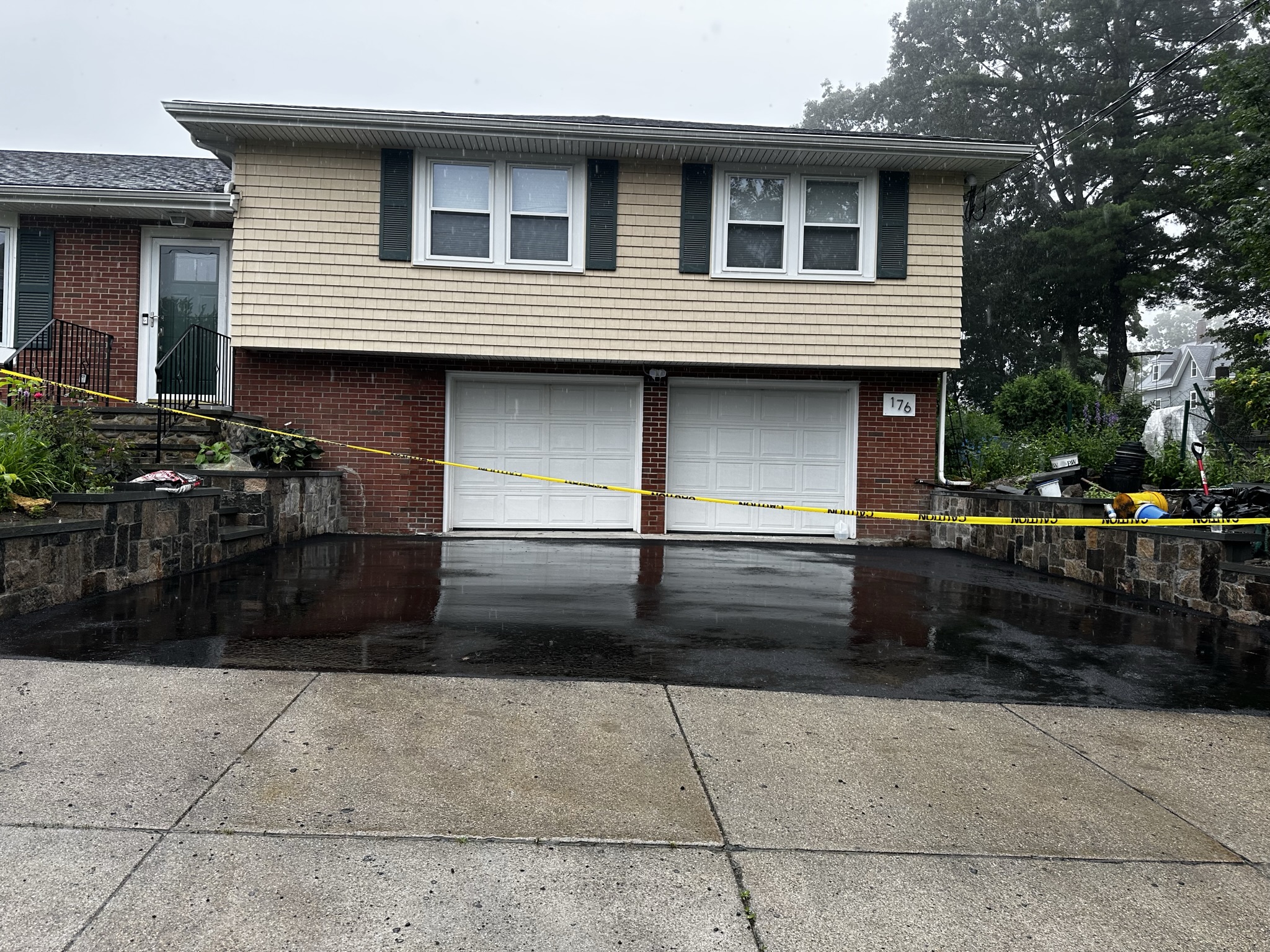
Short answer: standing water on a parking lot usually comes from one of four causes: clogged inlets, low spots where the pavement has settled, too little slope, or a failing underground drainage system. Fixes range from cleaning inlets and patching low spots to milling and overlaying with corrected grades, adding concrete valley gutters or repairing the drainage structures.
In Central Florida, where summer storms can drop a lot of rain in a short time, a parking lot's drainage is tested almost every afternoon from June through September. A lot that drains well sheds the water in minutes. A lot that ponds holds it against the pavement for hours, and that water steadily works its way into the base. Standing water is also a slip hazard and a source of tenant and resident complaints, and it can collect around accessible spaces where the slope is meant to stay nearly flat.
How standing water damages asphalt
- It finds every crack. Water that sits on the surface seeps into cracks and joints and reaches the base.
- It weakens the base. Saturated base and sandy subgrade lose strength, and traffic starts to deform the pavement.
- It speeds up raveling. Repeated wetting strips binder from the stone, especially on oxidized surfaces.
- It makes low spots deeper. As the area settles, it holds more water, and the cycle repeats.
That is why potholes and alligator cracking often appear exactly where water ponds. Our article on how Florida heat and rain damage asphalt explains the process in more detail.
Common causes of ponding
Clogged or buried inlets
Leaves, sand, mulch from landscaped islands and litter collect on grates and in catch basins. A partly blocked inlet can turn a normal storm into a lake. This is the cheapest problem to fix and the first thing to check.
Settled or low areas
Pavement can settle where the base was weak, where trenches were dug for utilities, or around inlets and manholes. Even a depression of a fraction of an inch can hold water across a wide area.
Not enough slope
Parking areas are commonly designed with slopes of roughly 1 to 2 percent or more so water runs toward inlets or edges. Lots that were built too flat, or that have been overlaid several times without milling, may no longer have enough fall. Accessible spaces and aisles have their own limits on slope, so any correction near them has to respect those limits.
Underground systems that no longer drain
Many Central Florida sites send stormwater to retention ponds, swales or underground exfiltration pipes. Over time these can silt up, become blocked by roots or be damaged. When water backs up out of an inlet instead of going down it, the problem is below the pavement.
Edges and curbs
Broken curbs, pavement edges higher than the adjacent grass, and landscaping that has built up above the pavement can all stop water from leaving the lot where it was designed to.
How to diagnose your lot
- Watch it rain. Walk the lot during or right after a storm and photograph where water collects and which way it flows.
- Check the next day. Mark the puddles still there hours later; those are your problem areas.
- Look at the inlets. Are grates clear? Does water flow in, or does it back up?
- Look for damage at the puddles. Cracking, raveling or potholes inside a ponding area confirm the water is doing harm.
- Get a professional look. A contractor can check grades with a level or laser and recommend the right fix; for structures and pipes, a civil engineer or drainage specialist may be needed.
Fixes, from simplest to largest
Which fix applies depends on the cause; pricing depends on the size of the area and the work involved, so get an on-site estimate.
| Fix | When it fits |
|---|---|
| Clean inlets, grates and swales | Water backs up at drains; debris is visible |
| Infrared repair or cut-and-patch | Small, isolated low spots (birdbaths) |
| Raise or rebuild around inlets | Pavement has settled around a drain or the drain sits too high |
| Concrete valley gutter or ribbon curb | A long, flat area needs a defined channel to carry water |
| Mill and overlay with corrected slope | Wide areas with too little fall, sound base |
| Regrade and reconstruct | Widespread ponding with base failure |
| Repair or add drainage structures | Underground system is blocked, damaged or undersized |
A sealcoat will not fix ponding. It may make the lot look better for a season, but water standing on it will wear it away faster, and the base problem remains.
Permits and the bigger picture
Cleaning and surface repairs are routine maintenance. Changing grades across a lot, adding inlets, or altering the stormwater system can require approval from the city or county, and some sites have permits with the regional water management district that set how stormwater must be handled. Check with the local building or engineering department, or the site's civil engineer, before redesigning drainage.
Preventing the problem from coming back
- Clean inlets at least quarterly and after major storms
- Seal cracks before the rainy season
- Keep landscaping and mulch below the pavement edge
- Aim sprinklers away from the pavement
- Mill along curbs and inlets when resurfacing, so the surface does not build up
GC Asphalt Services corrects low spots and slope problems through patching, resurfacing and concrete curbs and gutters, for lots in Orlando, Winter Park, Maitland, Casselberry, Sanford and the other cities we serve. Request a site assessment, and send photos of the ponding if you have them.
Frequently asked questions
How long should water stand on a parking lot after rain?
On a well-drained lot, most water should run off during or shortly after the storm. Puddles that are still there several hours later, or the next day, point to low spots, a slope problem or a blocked inlet.
What slope does a parking lot need to drain?
Asphalt parking areas are commonly designed with slopes of about 1 to 2 percent or more toward inlets or edges, within the limits that apply to accessible spaces and routes. The exact design is set by the site engineer and local code.
Can a low spot in a parking lot be fixed without repaving?
Often, yes. Small low spots, sometimes called birdbaths, can be corrected with an infrared repair or a cut-and-patch that raises the area to the right grade. Larger slope problems usually need milling and an overlay or regrading.
Why does my parking lot flood even though it has drains?
Common causes are inlets clogged with leaves, sand and debris, pipes or underground structures that are blocked or damaged, pavement that has settled around the inlet, and retention or exfiltration systems that no longer drain as designed.
Do I need a permit to change parking lot drainage in Florida?
Changing drainage structures, grades or stormwater systems may require approval from the city or county, and in some cases the regional water management district. Routine cleaning and surface repairs usually do not, but check before redesigning.