Asphalt Overlay vs Full Replacement: How to Decide
Resurfacing costs less and closes the lot for less time, but only if the base underneath is still sound. Here is how to tell which job your pavement needs.
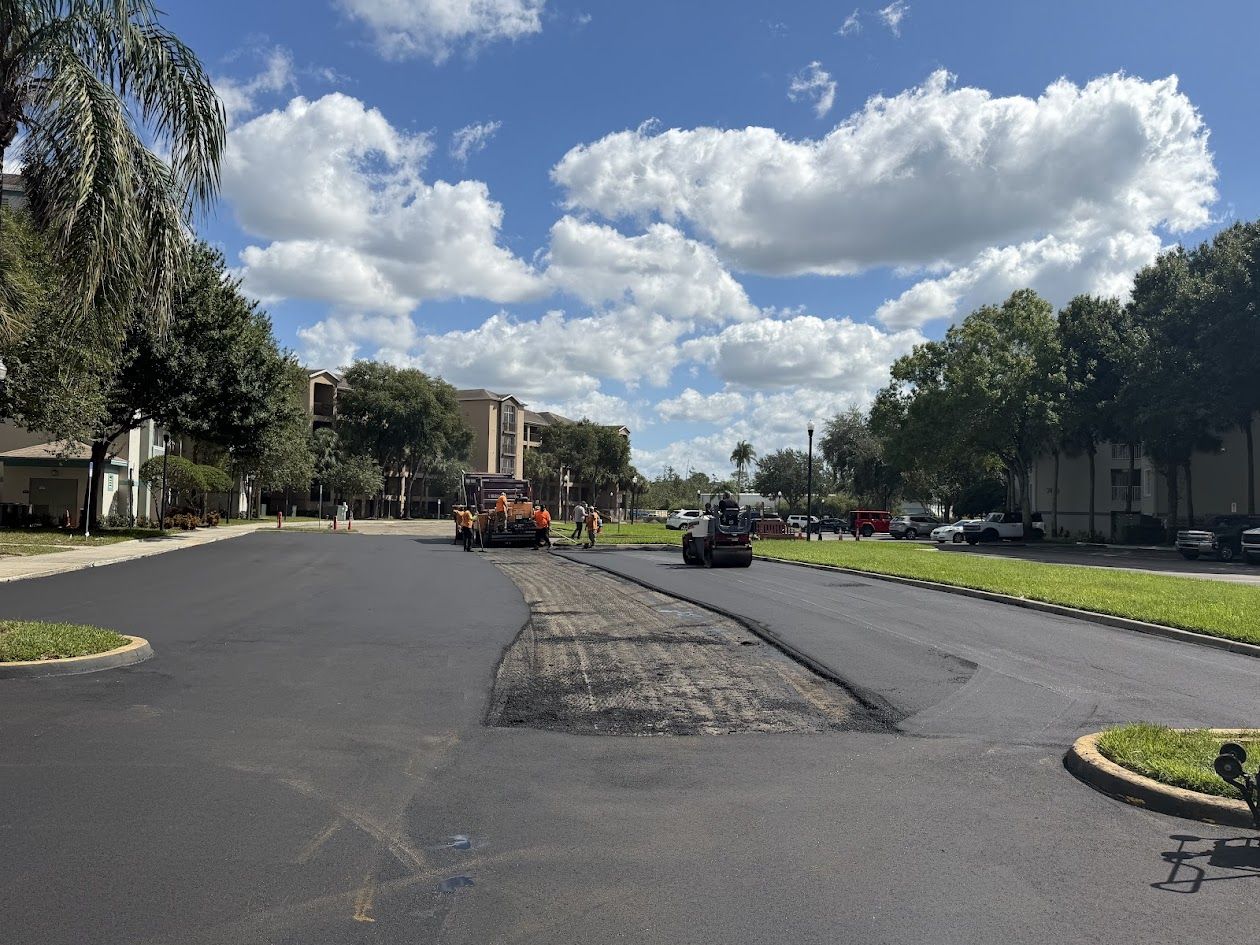
Short answer: overlay (resurface) when the damage is mostly at the surface and the base is sound. Replace when alligator cracking, sunken areas and drainage failures are widespread, because a new surface over a failed base will crack again. Many lots get a mix of both: full-depth repairs where the base has failed and an overlay everywhere else.
Every asphalt parking lot and community road eventually reaches the point where sealcoating and patching are no longer enough. At that stage, the decision is between an overlay, which adds a new layer of asphalt over the existing pavement, and full replacement, which removes the pavement and often the base. The difference in cost and disruption is large, so it pays to understand what each one involves before a board vote or a capital budget.
What an asphalt overlay involves
- Repair failed areas: sections with base failure are cut out and repaired full-depth.
- Mill where needed: the top of the old surface is ground off along curbs, gutters, drains and entrances so the new surface ends up at the right height.
- Seal cracks and clean: remaining cracks are treated and the surface is swept.
- Tack coat: a thin asphalt emulsion is sprayed so the new layer bonds to the old one.
- Pave and compact: new hot-mix asphalt is placed, commonly around 1.5 to 2 inches thick for parking areas, and rolled.
- Re-stripe: the layout is painted on the new surface.
Overlay work can usually be phased so part of the lot stays open, and the pavement is typically ready for traffic the same day or the next, once it has cooled.
What full replacement involves
Replacement removes the existing asphalt, and in most cases also repairs or rebuilds the base. The subgrade is checked and compacted, new base material is placed and graded so water runs to the drains, and new asphalt is laid in one or more lifts. It is also the chance to correct slopes, add drainage structures and change the layout. It costs more and takes longer, but it resets the pavement's life.
Signs an overlay is likely enough
- Cracks are mostly individual lines rather than interconnected patterns
- The surface is faded, oxidized or raveling, but not sunken
- Only a few isolated areas show base failure
- Water drains reasonably well, with only small low spots
- The lot has been maintained with crack sealing and sealcoating
Signs replacement is likely needed
- Alligator cracking over a large share of the lot; a common rule of thumb is when it goes beyond roughly a quarter to a third of the area
- Ruts, depressions and potholes that return after patching
- Large areas that hold water after every storm
- Pavement already built up so high by past overlays that curbs and drains no longer work
- Soft or pumping areas where water and fines come up through cracks under traffic
These are general indicators, not a diagnosis. A contractor should walk the lot, map the distress and, where the answer is not obvious, take core samples or test holes to see the thickness of the asphalt and the condition of the base.
Overlay vs replacement compared
Typical characteristics from general industry practice; actual cost and life depend on the site.
| Overlay (resurfacing) | Full replacement | |
|---|---|---|
| Requires a sound base | Yes | No; the base is repaired or rebuilt |
| Relative cost | Lower | Higher |
| Disruption | Shorter; easy to phase | Longer; larger closures |
| Typical life | Often about 8–15 years | Often about 15–25 years or more with maintenance |
| Fixes drainage and grades | Small corrections only | Yes |
Options between the two
The choice is not always all or nothing. Common middle paths include:
- Repair and overlay: failed areas are replaced full-depth and the whole lot is then overlaid. This is the most common approach for lots with scattered base failure.
- Phased resurfacing: the most worn areas, usually entrances and main drive lanes, are resurfaced first and parking rows in a later budget year.
- Full-depth reclamation: on large areas, equipment can grind the old asphalt and base together, mix and compact them into a new base, and pave over it. Whether it suits a site depends on the existing materials and the size of the job.
A phased plan fits well with a reserve budget, because it spreads the cost across years. Our maintenance schedule and budgeting guide shows how to plan for it.
Florida-specific points
- Drainage comes first. With heavy summer rain and a high water table in many parts of Central Florida, a lot that ponds will keep failing until the water problem is solved. An overlay can correct small low spots; larger problems may need regrading or new structures.
- Curb and inlet heights. Repeated overlays without milling raise the pavement until water stops reaching the inlets and curbs lose their height. Milling avoids that.
- Heavy-load areas. Dumpster enclosures and truck loading areas often fail first in summer heat. Concrete pads in those spots can make sense during either project.
- Timing. Paving is possible much of the year, but the drier months, roughly October through May, are easier to schedule.
Questions to ask before you decide
- What share of the lot needs full-depth repair before an overlay?
- Will you mill, how deep, and where?
- How thick will the new asphalt be after compaction?
- Were cores taken, and what did they show?
- How will drainage problems be corrected?
- How will the work be phased so tenants or residents can still park?
For costs, get an on-site estimate; the size of the area, the amount of base repair and the milling depth change the number more than anything else. Our paving cost guide explains the main price factors.
GC Asphalt Services handles asphalt resurfacing and overlays, full replacement paving and the full-depth repairs that go with them, for lots and community roads in Orlando, Winter Garden, Ocoee, Apopka, Longwood and the other cities we serve. Request a written estimate and we will tell you which approach your pavement needs.
Frequently asked questions
How do I know if my parking lot can be resurfaced instead of replaced?
An overlay works when the base is still sound: cracking is mostly at the surface, there is little alligator cracking, few sunken areas and no widespread drainage failure. A contractor can confirm by inspecting the lot and, where needed, taking core samples.
How long does an asphalt overlay last?
An overlay on a sound base is commonly expected to last roughly 8 to 15 years with regular crack sealing and sealcoating. It cannot outlast a failing base, which is why base condition matters more than the overlay thickness.
What is milling and why is it done before an overlay?
Milling grinds off the top layer of old asphalt. It removes oxidized and cracked material, keeps the finished surface at the right height against curbs, drains and building entrances, and gives the new layer a rough surface to bond to.
Can you overlay only part of a parking lot?
Yes. Many owners repair failed areas full-depth and overlay the rest, or resurface the most worn drive lanes first and the parking rows later. Phasing also keeps part of the lot open.
Is full replacement always the better long-term choice?
Not always. If the base is sound, an overlay usually gives much of the life of new pavement for less money and less disruption. Replacement makes sense when the base has failed across large areas or the grades and drainage need to be rebuilt.