How Often Should a Parking Lot Be Re-Striped in Florida?
Striping fades faster in Florida sun than most owners expect. Here is how often to repaint, which materials last longer, and the layout rules to check first.
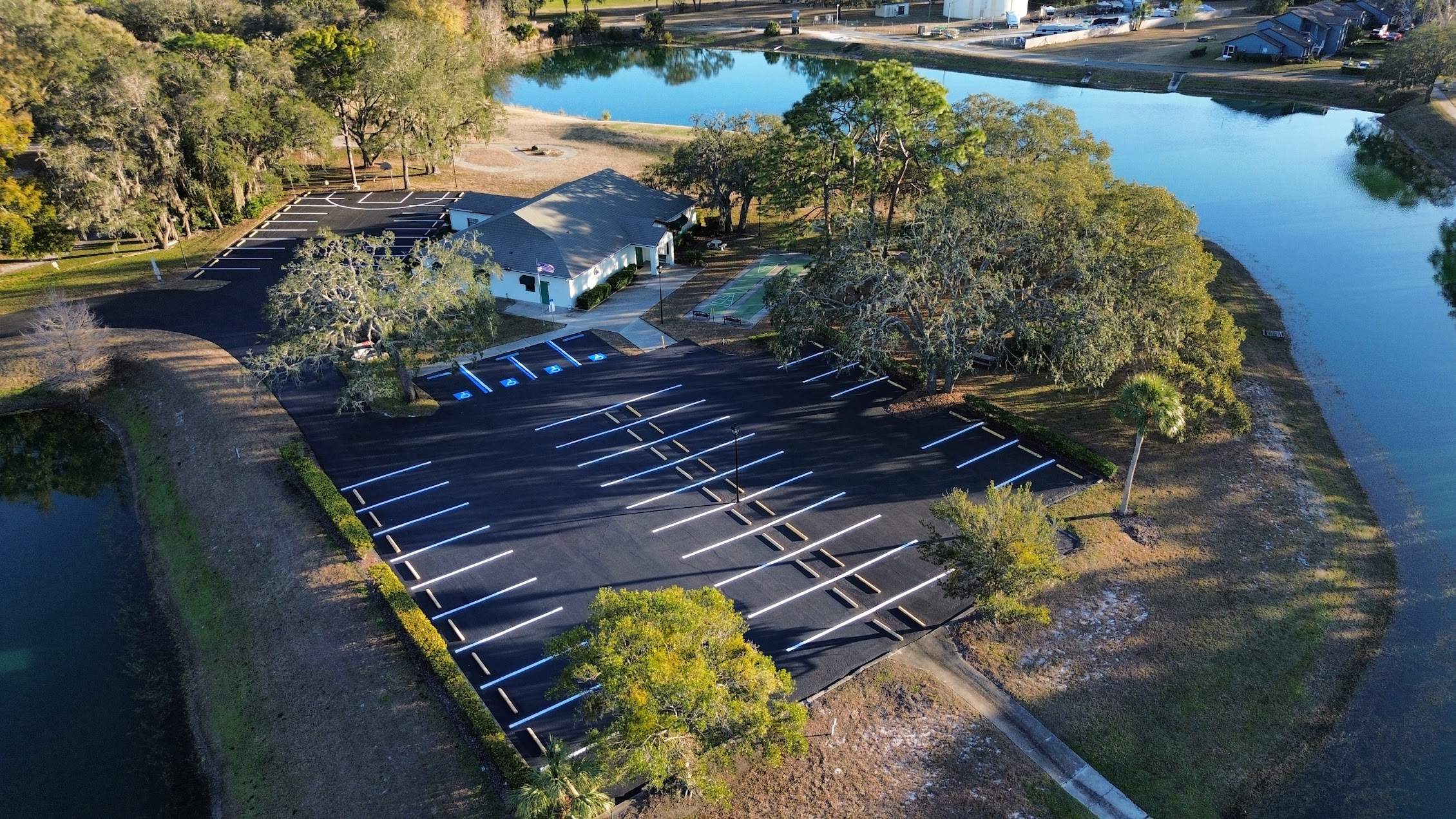
Short answer: most Central Florida parking lots need re-striping every 2 to 3 years, busy retail lots every 1 to 2 years, and every lot after a sealcoat. Re-stripe sooner whenever accessible spaces, fire lanes or crosswalks are no longer clearly visible.
Striping is the cheapest part of a parking lot and the part people notice first. Clear lines make drivers park straight, keep fire lanes open, direct traffic away from pedestrians and show that the property is cared for. Faded lines do the opposite, and missing accessible-space markings can create compliance problems for the owner.
How often to re-stripe a parking lot in Florida
These are typical ranges from general industry experience. Traffic and sun exposure on your lot decide the real interval.
| Property | Typical interval | Why |
|---|---|---|
| Retail centers, restaurants, gas stations | Every 1–2 years | Constant turning traffic wears lines in drive aisles. |
| Office parks, medical offices | Every 2–3 years | Moderate traffic, mostly daytime parking. |
| HOA and condo communities | Every 2–4 years | Lower speeds, but full sun on open lots. |
| Warehouses and truck areas | Every 1–2 years | Heavy tires and dragging loads scrub paint away. |
| After any sealcoat | Every time | Sealcoat covers the existing layout. |
Signs it is time
- Lines that are hard to see at night or when the pavement is wet
- Accessible-space symbols, aisle hatching or "No Parking" lettering that has worn through
- Fire-lane curbs and text that have faded
- Drivers parking crooked or across two stalls
- Arrows and stop bars that have disappeared in the busiest turning areas
Why striping fades faster in Central Florida
Three things work against paint here. Strong year-round sun breaks down the pigment and binder. Afternoon storms in the rainy season wash grit across the lot, and tires grind it into the lines. And heat softens the asphalt surface itself, so paint on oxidized, crumbling asphalt wears away with the pavement underneath. A lot in Kissimmee or Orlando with no shade will typically fade faster than one under oaks in Winter Park.
Paint or thermoplastic?
| Waterborne traffic paint | Thermoplastic | |
|---|---|---|
| Typical use | Stalls, aisles, most parking lot work | Crosswalks, stop bars, arrows, high-wear areas |
| Typical life | About 1–3 years | Often several years longer |
| Upfront cost | Lower | Higher |
| Reflective beads | Can be added | Usually included |
| Re-applying | Simple repaint over old lines | Needs a sound surface; old material may need removal |
Many owners use paint for the stall layout and thermoplastic only where wear is concentrated, such as crosswalks at entrances. Reflective glass beads in the paint help at night and in rain.
Layout basics to check before re-striping
Re-striping is the cheapest time to fix a layout that does not work. Before the crew arrives, check the items below. Local zoning and building codes set most of these numbers, so confirm a changed layout with your city or county.
Stalls and aisles
Standard stalls are commonly around 9 feet wide by 18 to 20 feet long, and two-way aisles for 90-degree parking are often around 24 feet wide. Angled parking allows narrower one-way aisles. Codes in Orange, Seminole and Osceola counties and individual cities differ, so treat these as typical figures.
Accessible spaces
The number, size and location of accessible spaces, the access aisles, the signs and the symbols all have specific requirements. Florida's accessibility code differs from the federal standard in some details, so have the layout checked against current Florida requirements rather than copying the old lines. Our guide to ADA parking requirements in Florida has a checklist, and our ADA compliance page explains the striping and sign work we do.
Fire lanes and traffic control
Fire-lane locations and markings are set by the local fire marshal, and requirements vary by jurisdiction. Keep existing fire-lane curbs and lettering bright, and do not move them without approval. Re-striping is also a good time to add or refresh stop bars, directional arrows and crosswalks, and to review whether the lot needs speed bumps or new signs.
Re-stripe over the old lines or lay out new ones?
If the layout works and the lines are only faded, the crew can repaint directly over them, which is the quickest option. If you are changing the layout, the old lines need to be covered. On a lot due for sealcoating, that happens naturally: sealcoat first, then lay out the new design on a clean black surface. Grinding or painting over old lines without a sealcoat often leaves "ghost" lines that confuse drivers.
What a re-striping job includes
- Cleaning: the lines are swept or blown clean. Paint does not bond to sand, dust or oil.
- Layout: for a new design, the crew measures and marks the stall lines, aisles and symbols with chalk or paint dots before striping.
- Striping: a line-striping machine paints stalls, aisles and fire-lane lines at a consistent width.
- Stencils: arrows, accessible-space symbols, "No Parking" and "Fire Lane" lettering are painted with stencils.
- Curbs and stops: painted curbs and wheel stops are refreshed if they are part of the scope.
- Reopening: cones stay in place until the paint has dried enough for traffic.
To get the most life out of new lines, keep the lot swept, deal with oil spots, and schedule striping for a clean, dry surface. Paint on a surface that is crumbling or heavily oxidized wears away with the asphalt, so on older lots a sealcoat first often makes the striping last longer.
Scheduling around tenants and residents
- Plan striping for dry weather; most Central Florida jobs are scheduled between October and May, or for summer mornings.
- Work section by section so part of the lot stays open.
- Choose early mornings, evenings or the slowest business day for commercial lots.
- Give HOA residents notice about which rows will be closed and when.
GC Asphalt Services provides parking lot striping for commercial properties and communities in Orlando, Sanford, Lake Mary, Apopka, Kissimmee and the other cities we serve. Request a written striping estimate and we will look at the existing layout before quoting.
Frequently asked questions
How often should a parking lot be re-striped?
Many commercial lots in Central Florida are re-striped every 2 to 3 years, and high-traffic lots such as retail centers may need it every year or two. Lots are also re-striped after every sealcoat, because sealcoat covers the old lines.
How long does parking lot paint last in Florida?
Waterborne traffic paint commonly lasts about 1 to 3 years on a Florida lot, depending on traffic, sun exposure and whether the surface was clean and dry when it was painted. Thermoplastic markings usually last several years longer.
Can you re-stripe without sealcoating first?
Yes. If the surface is in good shape, the existing layout can be repainted directly over the old lines. If the lot is due for sealcoating within the next year, it usually makes sense to sealcoat first and stripe once.
Can I change my parking lot layout when re-striping?
Often, yes, but stall sizes, aisle widths, fire lanes and the number and placement of accessible spaces are set by local codes and accessibility rules. Check a new layout with your city or county before the paint goes down.
How long before cars can park on fresh striping?
Waterborne paint is usually dry enough for traffic in well under an hour in warm, dry weather. Humidity and cooler temperatures slow drying, so crews often cone off sections until the lines are set.